

Exploring the realm of full coverage auto insurance, this overview delves into the intricacies of comprehensive protection and the key differences between full coverage and liability-only insurance. By unraveling the components, factors affecting rates, and tips for choosing the right policy, readers will gain a comprehensive understanding of this essential aspect of car ownership.
What is Full Coverage Auto Insurance?
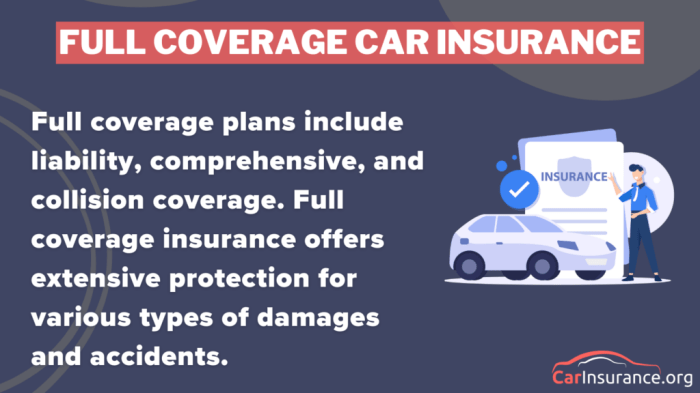
Full coverage auto insurance is a type of insurance policy that provides a wide range of protection for your vehicle. It typically includes both collision and comprehensive coverage, in addition to liability coverage.
Difference Between Full Coverage and Liability-Only Insurance
Full coverage auto insurance goes beyond the basic liability coverage required by law. While liability-only insurance only covers damages and injuries to others in an accident where you are at fault, full coverage also protects your own vehicle.
- Collision Coverage: This part of full coverage insurance helps pay for repairs or replacement of your vehicle if it is damaged in a collision with another vehicle or object.
- Comprehensive Coverage: This coverage protects your vehicle from non-collision related incidents such as theft, vandalism, or natural disasters.
- Liability Coverage: This is included in full coverage as well, providing protection in case you are at fault in an accident that results in property damage or injuries to others.
Importance of Full Coverage for Comprehensive Protection
Having full coverage auto insurance is essential for ensuring comprehensive protection for your vehicle. It not only safeguards you against financial liabilities in accidents but also covers damages to your own vehicle in various scenarios beyond just collisions.
Components of Full Coverage Auto Insurance
Full coverage auto insurance typically includes a combination of different types of coverage to provide comprehensive protection for your vehicle.
Collision Coverage
- Covers damage to your vehicle resulting from a collision with another vehicle or object.
- Benefits include coverage for repair costs or the actual cash value of your vehicle if it is totaled.
- Helps you get your vehicle back on the road quickly after an accident.
Comprehensive Coverage
- Protects your vehicle from non-collision incidents such as theft, vandalism, fire, or natural disasters.
- Necessary when you want coverage for events beyond just accidents.
- Provides financial protection for a wide range of potential risks to your vehicle.
Coverage Limits and Options
- Policy limits determine the maximum amount your insurance will pay for covered claims.
- Options may include uninsured/underinsured motorist coverage, medical payments coverage, and rental car reimbursement.
- Choosing higher limits and additional coverage options can provide more comprehensive protection but may result in higher premiums.
Factors Affecting Full Coverage Auto Insurance Rates
When it comes to determining the cost of full coverage auto insurance, several key factors come into play. These factors can significantly impact the premiums paid by drivers. Let's delve into the main elements that influence full coverage auto insurance rates.
Driver’s Age
The age of the driver is a crucial factor in determining full coverage auto insurance rates. Typically, younger drivers under the age of 25 tend to pay higher premiums due to their lack of driving experience and higher likelihood of being involved in accidents.
Location
Another important factor affecting full coverage auto insurance rates is the driver's location. Urban areas with higher traffic congestion and crime rates may lead to increased premiums compared to rural areas with lower risk factors.
Driving History
A driver's past driving record plays a significant role in determining insurance rates. Those with a history of accidents, traffic violations, or DUI offenses are considered higher risk and may face higher premiums compared to drivers with a clean record.
Vehicle Type
The type of vehicle being insured also influences full coverage auto insurance rates
Deductibles
Deductibles are another crucial factor that impacts insurance premiums. A deductible is the amount a driver must pay out of pocket before the insurance coverage kicks in. Opting for a higher deductible can lower premiums, but it also means the driver will have to pay more in the event of a claim.
Choosing the Right Full Coverage Auto Insurance
When it comes to choosing the right full coverage auto insurance policy, there are several factors to consider in order to make an informed decision that suits your needs and budget.
Compare Quotes from Different Insurance Companies
Before committing to a full coverage auto insurance policy, it's essential to compare quotes from different insurance companies. This will help you determine the best coverage options at competitive rates.
- Obtain quotes from at least three different insurance providers to ensure you are getting a fair comparison.
- Consider factors such as deductibles, coverage limits, and additional benefits offered by each company.
- Choose a policy that provides adequate coverage for your vehicle and personal needs, while also fitting within your budget.
Importance of Customer Reviews and Ratings
Customer reviews and ratings can provide valuable insights into the quality of service and claims process of an insurance company. Consider the following:
Look for feedback on customer service, claims processing, and overall satisfaction from current policyholders.
- Check independent review websites and forums to get a comprehensive view of the insurance company's reputation.
- Pay attention to any recurring complaints or praises to make an informed decision.
Consider Financial Stability and Reputation of the Insurance Provider
Ensuring the financial stability and reputation of the insurance provider is crucial when selecting a full coverage auto insurance policy. Here are some points to consider:
Verify the financial strength ratings of the insurance company from agencies like A.M. Best, Standard & Poor's, or Moody's.
- Choose an insurance company with a strong financial standing to ensure they can fulfill their obligations in case of claims.
- Research the company's history of handling claims and their reputation within the industry.
- Consider the longevity and stability of the insurance provider to gauge their reliability over time.
Understanding Coverage Limits and Deductibles
When it comes to full coverage auto insurance, understanding coverage limits and deductibles is crucial for making informed decisions about your policy. Coverage limits refer to the maximum amount your insurance will pay out for a covered claim, while deductibles are the amount you must pay out of pocket before your insurance kicks in.
Impact of Coverage Limits on Premiums and Coverage
- Higher coverage limits usually mean higher premiums, but they also provide more protection in case of a claim. On the other hand, lower coverage limits may result in lower premiums, but you may not have enough coverage in the event of a major accident.
- It's important to assess your individual needs and financial situation when choosing coverage limits to strike a balance between affordability and adequate protection.
Working of Deductibles in Insurance Claims
- Deductibles are the amount you agree to pay before your insurance company covers the rest of the claim. For example, if you have a $500 deductible and a covered claim totals $2,000, you would pay $500, and your insurance would cover the remaining $1,500.
- Choosing a higher deductible can lower your premiums, but it also means you'll have to pay more out of pocket in the event of a claim. Conversely, a lower deductible will lead to higher premiums but less out-of-pocket expenses at the time of a claim.
Epilogue
In conclusion, full coverage auto insurance is not just a safety net for your vehicle but a shield against unforeseen circumstances. By grasping the nuances of coverage limits, deductibles, and selecting the right policy, you can navigate the road with confidence and peace of mind.
Questions and Answers
What does full coverage auto insurance include?
Full coverage typically includes liability, collision, and comprehensive coverage to provide extensive protection for your vehicle.
How do coverage limits and deductibles impact insurance premiums?
Choosing higher coverage limits or lower deductibles can increase premiums but also offer more extensive coverage in case of an accident.
What factors affect the cost of full coverage insurance?
Factors such as age, location, driving history, and the type of vehicle can influence the rates of full coverage auto insurance policies.